The recent summit meeting between the Soviet and American leaders has confirmed the trend towards close relations between the two countries. It would seem that this kind of political summitry is to become a regular feature of the international calendar.
For some weeks now, all the headlines of the world’s press have been concentrating, quite properly, on the Middle East war, the emerging oil crisis and the continuing saga of political corruption and deceit within the United States. We have had, therefore, little or no opportunity to be reminded of the forgotten but unrelenting war in Indochina.
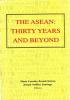
Joseph A. Camilleri, 'ASEAN’s Unique Contribution to Regional Security', in Maria Lourdes Aranal-Sereno and Joseph Sedfrey Santiago (eds.), The ASEAN: Thirty Years and Beyond, Quezon City: Institute of International Legal Studies, 1997, pp. 299-324.
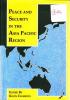
Joseph A. Camilleri, 'Rethinking the Security Agenda for the Asia-Pacific Region', in Kevin Clements (ed), Peace and Security in the Asia Pacific Region, Tokyo, United Nations University Press, 1993, pp. 329-349.
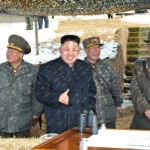
One thing is clear: North Korea, regardless of its belligerence, lacks the means to defeat South Korea, or to inflict any military damage on the United States. The motive therefore lies not in the execution of any military threat but in the theatre of threat-making.
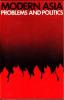
Joseph A. Camilleri, 'Pakistan and Bangladesh', in Modern Asia: Problems and Politics, edited by R. Brissenden and J. Griffin, Brisbane, Jacaranda Press, 1974, pp 71-85.